


Social Value Malaysia

Search
×
Generic selectors
Exact matches only
Search in title
Search in content
Post Type Selectors

case study

SVI Report Assurance: AZAM Microfinance Programme by Alliance Islamic Bank

26 August 2026 | SROI |  Banking Sector

Assurance strengthens confidence in impact reporting by helping organisations move beyond attractive stories and examine whether the evidence and evidencing process supports the conclusions being presented. 


The Alliance Zakat Microfinancing (AZAM) Programme by Alliance Islamic Bank Malaysia Berhad is Malaysia’s first Islamic social funding programme that utilises zakat wakalah to provide Shariah-compliant business financing at no cost to asnaf micro-entrepreneurs. Operating in partnership with Amanah Ikhtiar Malaysia and Lembaga Zakat Selangor, AZAM goes beyond financial access – equipping participants with capital, business guidance and continuous support to build sustainable livelihoods and achieve long-term financial independence. 

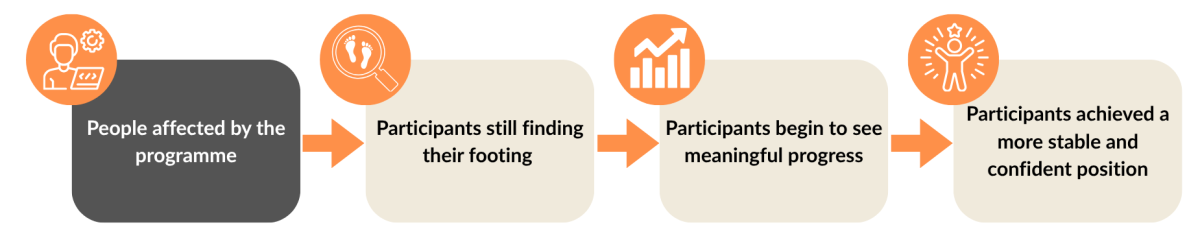
The programme was independently analysed using the Social Return on Investment (SROI) methodology across 117 participants between January 2024 and December 2025. Recognising that people affected by a programme do not experience change in the same way, the analysis was structured to reflect the different experiences and circumstances of those involved : 

This approach honours the principle that understanding what changes requires listening to the full range of people affected, not flattening their experiences into a single average. 

The analysis was subsequently assured by Social Value International (SVI), making AZAM the first assured SROI report in Malaysia’s banking sector and positioning Alliance Islamic Bank as a leader in evidence-based, accountable social finance. 

Through this case study, our Social Value Practitioners explore how assurance can clarify what the programme contributed to, whose lives changed, how those changes were evidenced, which assumptions were made, and where uncertainty remains. Social Value Practitioners supported the development of this work through careful evidence review, stakeholder-centred analysis, and assurance preparation, helping to ensure that what was claimed reflected what could genuinely be demonstrated. 

Good assurance makes the story more useful, transparent, and trustworthy. 

Why understanding different experiences matter

People affected by a programme do not experience change in the same way, at the same pace or to the same extent. For this reason, the AZAM analysis considered the different circumstances and experiences of participants rather than reducing their outcomes to a single average. 

This reflects the Social Value principles of involving stakeholders and understanding what changes. Listening to participants helps reveal not only whether change occurred, but what that change meant in their lives – from developing greater control over business finances, to managing household pressures, to building confidence and planning for the future. 

These different experiences also support the principles of materiality and avoiding over-claiming. A reported outcome may be significant to one participant but less relevant to another, and a positive experience for an individual should not automatically be presented as a programme-wide result. Treating the groups with different experiences – rather than fixed stages or a ranking of success – allows the analysis to recognise variation, examine the programme’s contribution more carefully and communicate its impact with greater honesty and precision. 

To know more about the report, visit here. 

Reflection

The certificate is the visible part of assurance. The less visible part is the discipline of listening to stakeholders, understanding what changed, testing the programme’s contribution and ensuring that claims remain proportionate to the evidence. Assurance is a process that helps organisations learn, improve and communicate impact with greater confidence. 

Sahabat A: Thriving

From hand-to-mouth trading to more stable daily income

Sahabat A and her husband run a small food stall that supports their household. Before receiving support, the business operated with very limited working capital. They could only purchase small amounts of stock at a time, while irregular customers and unexpected household expenses made it difficult to plan ahead.

Through AZAM, Sahabat A received RM5,000 in interest-free financing and attended short training sessions covering business management, stock planning, and cash-flow management. The financing helped the family purchase a refrigerator and buy ingredients in larger quantities, reducing the need to make small, frequent purchases.

The training also encouraged more deliberate planning around purchases, pricing, and daily operations. Over time, the household experienced more consistent income and shared financial responsibility. The family later moved beyond asnaf status, reflecting a growing sense of stability and independence.

For Sahabat A, the change was not simply about receiving financing. It was about gaining the capacity to manage the business with greater confidence and to think about the future beyond immediate daily needs.

“Now, we feel that we have the capability.”

What this story shows: Business capacity, more consistent income, shared responsibility, and confidence to plan ahead.

Sahabat B: Recovering

Drawing a clearer line between business money and household spending

Sahabat B helps run a small family food stall. Income depends on daily sales and can be affected by weather, customer demand, and changing household needs. When trading conditions are difficult, there may be little or no income for the day.

Before joining AZAM, money from the business and money for the household were treated as one pool. When a need arose, the available cash was used. This made it difficult to protect business capital, plan expenses, or prepare for slower trading days.

Through AZAM’s financial-management training, Sahabat B began to separate business capital from household spending. The family started to think more carefully about which costs needed to be protected, which expenses could be adjusted, and how business income should be managed.

The change is gradual and remains vulnerable to external pressures. However, the family now has a clearer way to manage short-term cash flow and make decisions. Financial stress has become easier to navigate because business money is no longer treated as immediately available for every household need.

“I learned how to manage money… separating capital from revenue.”

What this story shows: Better cash-flow discipline, clearer financial priorities, and greater ability to manage pressure.

Sahabat C: Emerging

From unstructured cash handling to more intentional business management

Sahabat C and her husband run a small food stall from their home. The business is an important source of household income, but daily operations previously left little room to separate business money from household spending or prepare for slower days.

Through AZAM’s entrepreneurship and cash-flow management sessions, Sahabat C began looking at business income differently. She started planning purchases more carefully, setting aside key operating costs, and saving a small portion of the business takings more deliberately.

Business and household responsibilities also became more structured. Rather than responding to each expense as it arose, the family began to make more intentional decisions about what needed to be protected and what could be spent.

The changes may appear modest, but they have made a meaningful difference to how the household manages daily pressures. Sahabat C feels more confident managing the business, supporting her family, and continuing to build towards a more secure future.

“The changes may not be significant, but to me, this is still a quiet achievement.”

What this story shows: More intentional spending, improved planning, stronger financial confidence, and gradual progress.

What the assurance process involved

Social Value Malaysia’s approach to impact evaluation places wellbeing at the centre of the analysis. For the AZAM Programme, this meant examining outcomes that extended beyond financial access, including: 

Financial Capability

The ability to manage business and household money with greater intention and discipline; “I learned how to manage money… separating capital from revenue.”— Sahabat B This quote illustrates a practical change in financial capability: recognising that business capital and household money serve different purposes. The outcome is not simply that financing was received, but that money could be managed with greater awareness and structure.

Business Resilience

The capacity to plan ahead, manage cash flow and respond to pressure without destabilising the household; “Now I can at least save a bit, and things feel more organised for the house and the stall.”— Sahabat A For Sahabat A, the reported change included more deliberate saving and greater organisation across the business and household. At the same time, the evidence shows that resilience is not the same as complete security: small businesses remain exposed to changing demand, unexpected costs, and other pressures.

Confidence and Agency

The sense that participants could make decisions, protect what they had built and look beyond immediate daily needs; and “The capital we receive can’t be spent freely. We need to know what to prioritise in the business.”— Sahabat C This reflects a stronger sense of agency in making business decisions and setting priorities. It also shows why the analysis must look at how people use support, not only at the amount of financing provided.

Household stability

The broader sense of security and reduced financial stress experienced within the family unit. “I feel more confident managing the stall’s finances, taking care of the household, and continuing with life despite the ongoing pressures.”— Sahabat C This is a stakeholder-reported experience of confidence and household wellbeing. It should be presented carefully: the quote indicates that financial pressures became more manageable for this Sahabat, but it does not prove that AZAM removed financial stress or produced the same outcome for every household

Ready to Build Your Own Change?

If you’re ready to create impact in your own organization, we’d love to work with you.