SVI Report Assurance: AZAM Microfinance Programme by Alliance Islamic Bank
Social Value Malaysia | SROI | Banking Sector
Assurance strengthens confidence in impact reporting by helping organisations move beyond attractive stories and examine whether the evidence and evidencing process supports the conclusions being presented.
The Alliance Zakat Microfinancing (AZAM) Programme by Alliance Islamic Bank Malaysia Berhad is Malaysia’s first Islamic social funding programme that utilises zakat wakalah to provide Shariah-compliant business financing at no cost to asnaf micro-entrepreneurs. Operating in partnership with Amanah Ikhtiar Malaysia and Lembaga Zakat Selangor, AZAM goes beyond financial access – equipping participants with capital, business guidance and continuous support to build sustainable livelihoods and achieve long-term financial independence.
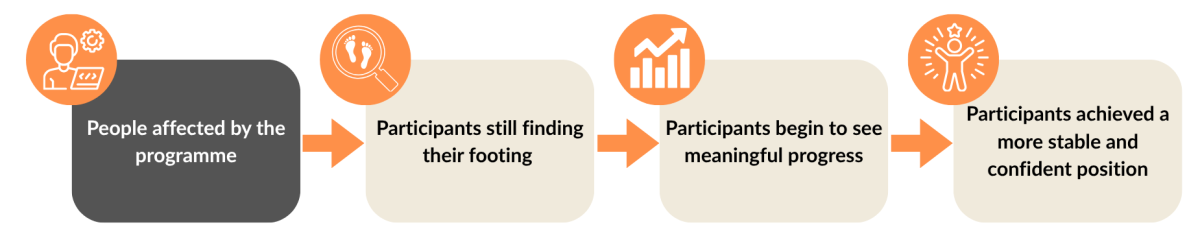
The programme was independently analysed using the Social Return on Investment (SROI)methodology across 117 participants between January 2024 and December 2025. Recognising that people affected by a programme do not experience change in the same way, the analysis was structured to reflect the different experiences and circumstances of those involved:
This approach honours the principle that understanding what changes requires listening to the full range of people affected, not flattening their experiences into a single average.
The analysis was subsequently assured by Social Value International (SVI), making AZAM the first assured SROI report in Malaysia’s banking sector and positioning Alliance Islamic Bank as a leader in evidence-based, accountable social finance.
Through this case study, our Social Value Practitioners explore how assurance can clarify what the programme contributed to, whose lives changed, how those changes were evidenced, which assumptions were made, and where uncertainty remains. Social Value Practitioners supported the development of this work through careful evidence review, stakeholder-centred analysis, and assurance preparation, helping to ensure that what was claimed reflected what could genuinely be demonstrated.
Good assurance makes the story more useful, transparent, and trustworthy.
Why understanding different experiences matter
People affected by a programme do not experience change in the same way, at the same pace or to the same extent. For this reason, the AZAM analysis considered the different circumstances and experiences of participants rather than reducing their outcomes to a single average.
This reflects the Social Value principles of involving stakeholders and understanding what changes. Listening to participants helps reveal not only whether change occurred, but what that change meant in their lives – from developing greater control over business finances, to managing household pressures, to building confidence and planning for the future.
These different experiences also support the principles of materiality and avoiding over-claiming. A reported outcome may be significant to one participant but less relevant to another, and a positive experience for an individual should not automatically be presented as a programme-wide result. Treating the groups with different experiences – rather than fixed stages or a ranking of success – allows the analysis to recognise variation, examine the programme’s contribution more carefully and communicate its impact with greater honesty and precision.
The certificate is the visible part of assurance. The less visible part is the discipline of listening to stakeholders, understanding what changed, testing the programme’s contribution and ensuring that claims remain proportionate to the evidence. Assurance is a process that helps organisations learn, improve and communicate impact with greater confidence.
Ready to Build Your Own Change?
If you’re ready to create impact in your own organization, we’d love to work with you.